For a commercial room, size the fan before you choose anything else. A 25-36 inch fan suits rooms up to roughly 9 m², 44-48 inch suits about 12-20 m², and 52 inch is the practical choice for open areas above 20 m². Then settle the ceiling height and the drop rod that follows from it, the light function, and how the unit will be controlled. The rest of this guide covers motor type, dimmable three-colour light kits, air-conditioning coordination, installation clearance, noise, and the seven questions worth asking a supplier before you order.
How to Size a Ceiling Fan for a Commercial Room
Match blade span to floor area
Blade span is the most useful number on the specification sheet, because it determines how much air the fan can actually move. Our standard range covers 25-52 inch, and it maps onto commercial rooms like this.
| Blade span | Room area | Typical commercial fit | What to watch |
|---|---|---|---|
| 25-30 inch | up to 6 m² | Staff offices, WCs, store rooms, service corridors | Airflow concentrates directly beneath the blades; long corridors may need a second unit |
| 32-36 inch | 6-9 m² | Small hotel rooms, consultation rooms, back-of-house desks | Suits low ceilings; check the light kit does not sit in the eye line |
| 44-48 inch | 10-20 m² | Standard hotel guest rooms, private dining rooms, small meeting rooms | The common hospitality default; mount over the seating or bed zone |
| 52 inch | above 20 m² | Restaurants, lobbies, open-plan offices, covered terraces | In rooms longer than about 8 m, plan two fans |
Area is the first filter, not the final answer. Occupancy density matters as much as floor plate: a restaurant with heat gain from a kitchen pass needs more air movement than the same area used as a guest room, so err toward the larger span and let the speed steps handle the fine adjustment.
Adjust for ceiling height
Height changes the effective result of the same fan. In public areas, keep the lowest point of the blades at least 2.4 m above the finished floor so nobody walking beneath can reach them. On ceilings above 3.2 m, a drop rod between roughly 30 cm and 60 cm pulls the fan down into the occupied air layer, rather than circulating air in the top half metre of the room.
Low ceilings below 2.6 m need the opposite treatment: a flush or short-rod mounting, and a light kit that sits close to the motor housing rather than hanging below it.
Airflow, Motor Type and Variable-Frequency Control
What variable-frequency means in practice
Our ceiling fans with light use a variable-frequency drive, the technology often marketed as a DC ceiling fan motor. The practical difference shows in two areas: starting behaviour and speed control. A variable-frequency drive ramps the motor up instead of switching it hard on, which keeps running noise lower across the speed range, and it allows the speed steps to be finer. For a hotel corridor or a restaurant where guests sit directly under the fan, that behaviour matters more than any headline airflow figure. Confirm with any supplier whether the drive is built into the fan housing or sits in a separate controller, because it affects how the unit is wired and where it can be serviced.
Why six speeds beat three
Three-speed fans force a compromise: speed one is often too weak to feel and speed two is already too strong for a seated guest. Six speeds give the intervening settings you need in practice, and they let a facility team reduce air movement late in the evening without switching the unit off. On larger sites, note in the maintenance schedule which speed suits which season.
Dimmable Three-Colour LED Light Kits
One fixture, three settings
A dimmable three-colour LED lets the same fan serve warm and neutral lighting needs by switching between three fixed white settings rather than changing the lamp. That is useful on a hospitality project: housekeeping can work in a brighter, cooler setting, and the same room can be turned down to a warmer setting for evening arrivals. It also reduces the number of product variants a project has to stock.
Dimming checks before purchase
Before ordering, ask three questions. First, does dimming apply to all three colour settings? Second, does the fitting dim smoothly at the bottom of its range, or does it drop out suddenly on the lowest step? Third, is the light adjustable independently of fan speed, since a guest should be able to run the fan without the light and vice versa. Also confirm how the driver behaves after a momentary power interruption, because a brief outage that resets the fixture to full cool white at three in the morning is a complaint waiting to happen.
Running Fans Alongside Air Conditioning
Set-point logic
A ceiling fan does not cool air; it moves air across skin, which makes an occupant feel comfortable at a higher room temperature. In air-conditioned commercial buildings, the practical consequence is that you can raise the thermostat set-point by one to three degrees in spaces with moving air and still keep the room acceptable. Set that logic out in the commissioning notes: fans on a summer schedule, thermostat adjusted once, and staff instructed not to fight the fan by dropping the set-point further.
Air mixing and winter operation
In tall or zoned spaces, slow fan rotation keeps stratified warm air from sitting against the ceiling. If the model you intend to specify supports a reverse or winter mode, confirm it in writing before purchase; where it is not available, plan a low speed setting for that purpose instead. On air-conditioned sites, check that the fan group is not running continuously in unoccupied rooms and that it is tied into the same occupancy control as the lighting.
Remote and App Control in Commercial Projects
Zoning and group control
Remote and app control turns a room-by-room purchase into a manageable system. In a hotel, zoning lets reception set the default state of an unoccupied room, while the guest controls the unit locally. In a restaurant or open-plan office, group control lets one person set several fans to a matching speed, which avoids the uneven air movement you get when each unit is set by hand. App control also gives a facilities team a single place to check which units are running after hours, which is difficult when handsets are scattered across floors.
Wiring and handover
Whatever the control method, plan the wiring before the ceiling is closed. Remotes and app control reduce the amount of wall switching but do not remove the need for a permanent live feed and an isolation point for service. Handover should include the pairing procedure in writing, the number of handsets delivered against the number of fans, and a spare-unit policy for controllers, since a lost handset should not take a room out of service.
Noise, Bearings and Structural Points
Bearings, balance and blade pitch
Noise in a commercial fan comes from three places: the bearing, an unbalanced blade set and aerodynamic turbulence. Sealed bearings that do not need routine oiling suit hospitality and office use. Blade balance is checked at installation, and any fan that wobbles should be rebalanced rather than left running, because wobble accelerates bearing wear. Turbulence usually appears as a hum above a certain speed; if a fan is audible at speed three but quiet at speed six, the cause is usually blade aerodynamics rather than the motor.
Structural and electrical clearances
The mounting point must carry the weight of the fan, the light kit and the dynamic load of a spinning unit, which is why fans should hang from a dedicated ceiling point rather than a plasterboard panel. Confirm the supply voltage range matches the project destination and the ceiling wiring, and leave a documented procedure for lamp and driver replacement, since removing a fan to change a light is not an acceptable maintenance plan in an occupied building.
Seven Questions to Ask a Ceiling Fan Supplier
Ask these before the order is confirmed, and get the answers in writing on the quotation rather than verbally, because most site disputes trace back to one of them.
- What blade spans are in your standard range, and which span do you recommend for this floor area and ceiling height?
- Is the motor a variable-frequency type, and how many discrete speed steps does it offer?
- Is the light a dimmable three-colour LED, and does the dimming apply on every colour setting?
- What control options exist (handset, wall control, app), and can multiple fans be grouped?
- What drop rod lengths are available, and is flush mounting possible for low ceilings?
- What is the delivered lead time, and can the finish, colour temperature or packaging be adjusted for this project?
- What does the warranty cover, what is the spares process, and which replacement parts should be held on site?
If a supplier cannot answer question two or three without checking, treat the specification as unconfirmed until they do.
From Specification to Order
Bring the room schedule, the ceiling heights, the project voltage and the preferred control method, and the specification can be settled quickly. We manufacture ceiling fans with lights in Guzhen, Zhongshan from 25 to 52 inch, with variable-frequency motors, six speeds, dimmable three-colour LED light kits and remote or app control, and we support custom dimensions, finishes and packaging for hotel, office and restaurant projects. There is no minimum order, lead time is typically 15 to 30 days, and every unit carries a three-year manufacturer warranty. Fans are installed late in a fit-out but specified early, so resolving span, control and light function now avoids a change order at handover. Browse the ceiling fans with light range or pair the fans with surface-mounted ceiling lights where the room needs general illumination as well, then send your schedule through the contact page or WhatsApp +86 180 2480 4499 for a quotation.
About the author : hy-tanya@hotmail.com

Related posts
Popular products
-
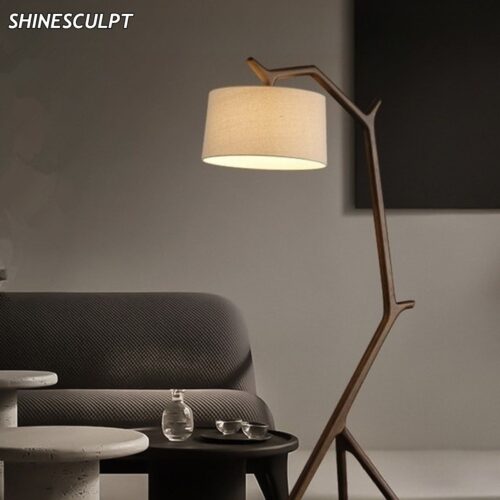 FL-013 Solid Wood Floor Lamp
Price range: $465.38 through $589.62
-
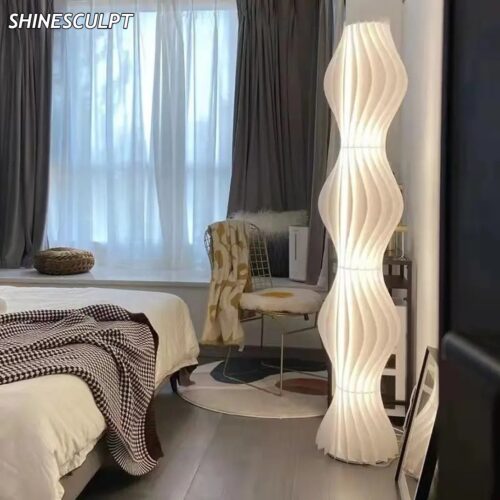 FL-012 Grass Skirt Floor Lamp
Price range: $34.62 through $62.31
-
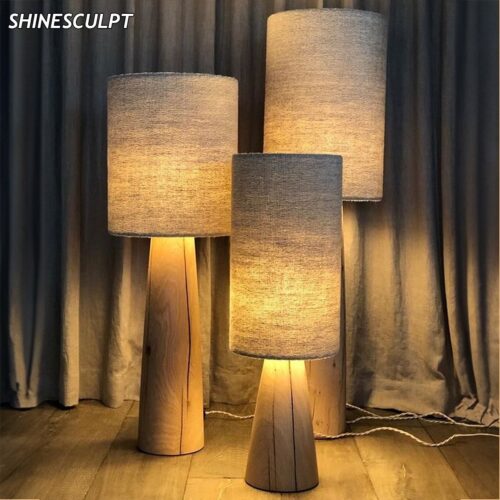 FL-011 Wabi-Sabi Floor Lamp
Price range: $500.00 through $576.92
-
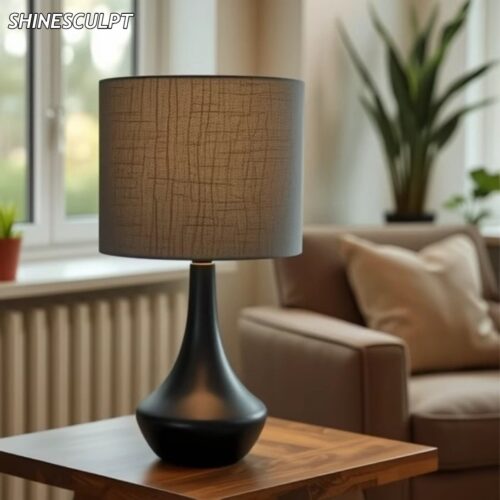 TL-006 Fabric Shade Bedside Lamp
$95.00