Hospitality table and floor lamps are chosen in this order: zone first, then task, then dimensions, and only then finish. Bedside and desk positions take table lamps because the guest reaches them from a seat or a bed; lounge corners, restaurant perimeters and reading alcoves take floor lamps because they need height without taking table space. Fix the shade diameter, the beam direction and the switch position before you compare finishes, because those three decide whether the lamp actually works for a guest at 11 pm. This guide covers both types for hotel, restaurant and lounge projects, all of which we manufacture to order.
Matching the Fitting to the Zone: Table or Floor
The zone answers the type question faster than any style discussion. A table lamp lives above a surface, so it only works where a surface exists at the right height and depth. A floor lamp lives on the floor, so it only works where the floor area is not a circulation path and where the base will not be kicked.
| Zone | Preferred type | Why it fits | Dimension to fix first |
|---|---|---|---|
| Guest room bedside | table lamp | local control within reach of the bed | nightstand depth against base diameter |
| Guest room desk or worktop | table lamp | task light close to the working surface | shade bottom relative to seated eye level |
| Lounge and lobby seating | floor lamp | light at seat height without using table space | base diameter and total height |
| Restaurant perimeter banquette | floor lamp or tall table lamp | soft light beside the seating, clear of service routes | base clearance behind the banquette |
| Corridor console or lift lobby | table lamp | decorative accent on a fixed surface | shade proportion against console width |
The table above also sets the quantities argument. A room with two bedside tables needs two table lamps and matched finials; a lounge with four seating clusters normally reads better with two floor lamps positioned asymmetrically than with four evenly spaced ones, because even spacing draws attention to the lighting rather than the seating.
For hotel room table lamps, one further rule applies across every zone: the lamp is a guest-facing object that will be moved, knocked and switched many times a day. Anything that only works when it stays in exactly one position should not be specified.
Hotel Room Table Lamps: Height, Shade and Switch Placement
Matching the lamp to the nightstand and the mattress
The reference line for a bedside lamp is the mattress top, not the floor. A shade that sits well above the guest’s eye line when seated in bed creates glare; a shade whose lower edge falls close to the mattress surface gives a softer pool of light for reading. As a working rule, keep the bottom of the shade level with, or slightly above, the top of the mattress, and check that the base still fits the nightstand with at least 30 mm of clearance behind it for the cable. Shade diameter should stay below roughly three quarters of the nightstand width so the lamp does not overhang the guest’s phone and glass.
Where the switch belongs
The switch must be reachable while lying in bed without moving the lamp. That usually means a switch on the lamp base itself or an in-line switch on the cord within easy reach, rather than a rocker mounted halfway down the back. If the room is to be controlled from the bedside wall plate, confirm that the lamp circuit can be included; a guest who has to stand up to switch off a reading lamp will leave it on all night.
Reading light and ambient light are two different jobs
One lamp rarely does both well. A reading lamp needs a directional shade and a compact aperture so light lands on the page; an ambient lamp needs an open shade or a diffuser so light spreads across the room. Where a room has only one fitting per bedside table, choose the middle ground: a shade that is open at the bottom for a reading pool but wide enough to soften the surrounding area. Where the budget allows two sources per side, use a small directional table lamp for reading and let the room’s ambient layer come from elsewhere.
Floor Lamps for Lounges and Restaurants: Stability, Weight and Cable
A floor lamp is judged by how it behaves when nobody is watching. Stability is a product of three numbers working together: total height, base diameter and base weight. For lamps above 1.5 m, a base diameter of at least one third of the height keeps the centre of gravity low enough to resist a casual knock. A weighted base is the simplest way to reach that, but weight alone is not enough if the base is narrow.
Consider the contact points. A felt or rubber pad under the base protects timber and stone floors and also adds grip; a bare metal base slides and marks. For restaurants, where the lamp sits behind a banquette and is cleaned around daily, a base that cannot be tipped onto its edge by a vacuum head is worth more than a lighter one.
Cable routing deserves as much attention as the shade. A 3 m cord allows the lamp to be placed away from the wall socket, but the surplus has to go somewhere: specify an exit point low on the base, route the cable under the seating unit, and avoid a loose loop across a walkway, which is both a trip hazard and the first thing an inspector marks. An in-line foot switch is convenient in a lounge but easy to operate accidentally in a restaurant; a cord dimmer near the socket is the safer choice where staff rather than guests control the room.
Colour Temperature Consistency Across a Batch Order
Twenty lamps arriving in twenty cartons can still look like two different products on the floor if their light colour is not controlled. Visible differences show up fastest on white walls and pale joinery, and guests notice a mismatched lamp in a corridor long before they notice the fitting itself.
Three practical steps keep a batch consistent. First, order the whole batch in one production run rather than topping up later, and ask for the light colour to be grouped within a narrow band rather than simply stated as a nominal value. Second, check under the right conditions: compare two or three units side by side at night against a plain wall, not in daylight under a factory roof where mixed ambient light hides the difference. Third, test at the dimmest setting, since differences that are invisible at full output often appear when a dimmer is near the bottom of its range.
If a project mixes several lamp types in one room, keep the light colour identical across all of them and vary the quantity and direction of light instead. Where lamps are dimmable, confirm that the control method is the same across the order; a mixed group of control types produces uneven dimming even when the light colour matches.
Durability, Cleaning and Guest Handling
Hospitality lamps are handled far more than residential ones: a guest room lamp may be switched, moved and wiped every day of the year. Design for that cycle rather than for the showroom.
Metal finishes should be chosen for how they age, not only for how they look new. Brushed and matte surfaces show fingerprints and cleaning streaks less than polished ones, and a texture that hides marks also hides small scratches. Shade materials decide the cleaning routine: glass and metal shades can be wiped in place, while fabric shades need careful dry cleaning and will eventually need replacement, which means the shade should be replaceable without discarding the whole lamp.
Look at the points where the lamp is actually touched and moved. The cord entry at the base and the cord itself are the first components to fail when a lamp is dragged rather than lifted, so a grommet or a strain relief at the entry point extends service life. Base pads wear out and should be a replaceable part, not a moulded detail. And for lamps with an on-lamp switch, confirm the switch rating and ask whether the switch can be replaced separately.
A short acceptance check at delivery catches most problems early: two units powered side by side, both switched and dimmed through their full range, the cord inspected at the base, the base pads checked for correct fit, and the finish compared against the approved sample.
What to Send Us for a Made-to-Order Proposal
Table lamps and floor lamps are made to order at ShineSculpt, which means the dimensions, materials, finish and light colour are built for your project rather than selected from a list. To quote accurately on the first pass we need drawings or clear reference images with the key dimensions marked: total height, base diameter, shade diameter and cord length. List quantities per zone rather than as a single total, so the numbers can be checked against the layout, and state the destination market with its voltage and frequency, because the driver and plug arrangement differ between 120 V and 220–240 V installations. Tell us the control requirement (on-lamp switch, in-line switch, foot switch or dimmable), the preferred light colour, and whether all lamps in the order must match within one batch. Finish and shade material should be identified by sample or reference, and packaging by transport mode.
One point is worth deciding early: whether you want sample units before the batch. For a hotel floor, a single lamp tested in the actual room, under the actual dimmer, settles questions of height and light colour faster than any drawing. If your project needs hospitality table and floor lamps built to a specific height, finish or light colour, send the pack through our contact page or message us on WhatsApp at +86 180 2480 4499. We manufacture to order with no minimum order, a 15–30 day lead time and a 3-year manufacturer warranty, with worldwide door-to-door shipping.
About the author : hy-tanya@hotmail.com

Related posts
Popular products
-
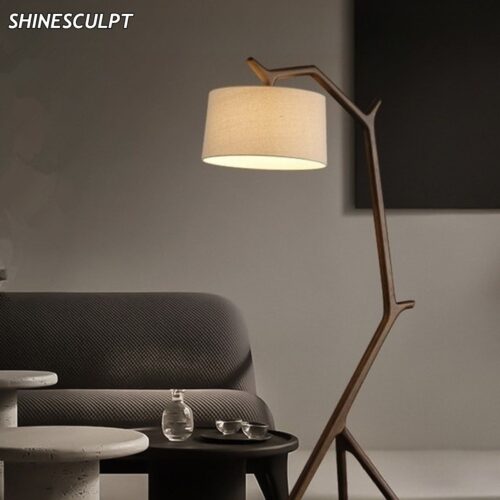 FL-013 Solid Wood Floor Lamp
Price range: $465.38 through $589.62
-
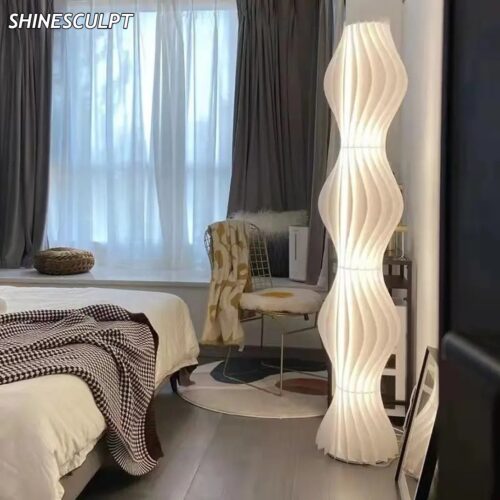 FL-012 Grass Skirt Floor Lamp
Price range: $34.62 through $62.31
-
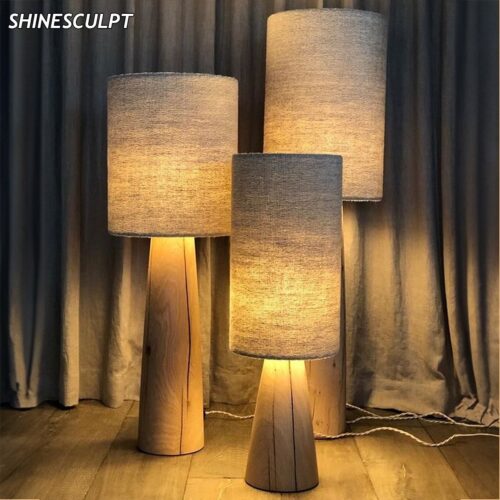 FL-011 Wabi-Sabi Floor Lamp
Price range: $500.00 through $576.92
-
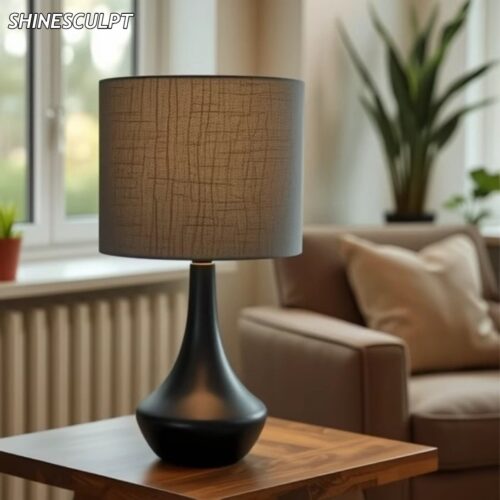 TL-006 Fabric Shade Bedside Lamp
$95.00