A custom lighting manufacturer produces fixtures to your drawing or performance brief instead of selling a fixed catalogue item. The work comes down to four decisions — size, material and finish, light source, and housing or branding — followed by a sample, a production run and export packing. ShineSculpt manufactures this way from Guzhen, Zhongshan City, with no minimum order, a 15–30 day lead time and a 3-year manufacturer warranty on finished fixtures. This page sets out what can be changed, what you need to send for a quotation, how sampling and mass production run, and the five mistakes that most often send a project back for rework.
What a Custom Lighting Manufacturer Can Change on a Fixture
Customisation on a decorative or architectural fixture falls into eight areas. Four are structural and lock at sampling; four are commercial and can still move at the packing stage. Deciding them in this order prevents the most common cause of a late project: a structural change requested after the sample is approved.
Dimensions and proportions
Diameter, overall height, profile depth, drop length and canopy size are all open. Custom dimensions are available across our product families, and our standard surface-mounted LED ceiling light platform runs from 35 cm to 80 cm, which covers most commercial rooms. Send each dimension with a tolerance and with the constraint behind it — ceiling grid spacing, a fixed furniture layout, or a service shaft the crate must clear.
Materials and surface finish
Body material sets weight, rigidity and how the fixture ages. Acrylic and iron are the two we work in most: acrylic where even light transmission matters, iron for frames and canopies where thin sections must stay straight. Approve finish from a physical sample under daylight rather than from a screen.
Light source, colour temperature and control
An E27 base lets the client replace lamps locally, which suits projects with on-site maintenance; an integrated LED gives a cleaner profile and one replacement event. Our ceiling and pendant platforms use E27 bases, our ceiling fans with light use dimmable three-colour LEDs, and input voltage across the range is AC85-265V, which removes the transformer question on most sites. Colour temperature and control method belong on the drawing.
Housing, packaging and branding
Logo placement, label content, barcode format, instruction language and master carton counts are decided here. Supply artwork in vector format with a stated minimum size, and state the destination country so labels match what the receiving warehouse expects.
Three Routes: Catalogue Modification, OEM and ODM
Not every project needs a new design. Choosing the right route keeps cost and risk proportional to the change, and it changes what you have to send us.
| Route | Design owner | What you send | What we do | Best fit |
|---|---|---|---|---|
| Catalogue modification | You choose, we adapt | Model reference plus a change list: size, finish, colour temperature, voltage, packaging | Apply the changes to an existing tooling platform and re-confirm dimensions on a sample | Fast rollouts, phased fit-outs, replacement runs |
| OEM | You | Complete drawing with tolerances, material and finish specification, light source, packaging artwork | Manufacture exactly to your drawing under your brand, with no design input from us | Contractors and studios with in-house design |
| ODM | Shared | Performance brief and reference images, with the constraints that matter | Develop the fixture, propose the construction, then produce a sample for approval | Buyers without in-house design capacity |
Under OEM and ODM the finished fixture still carries our 3-year manufacturer warranty; under catalogue modification the agreed changes are documented on the approval drawing.
What to Send Before We Can Quote
A quotation is only as good as the input. These four items cover the majority of stalled enquiries.
Drawings or reference images
A dimensioned drawing is best: overall size, mounting method, material, finish, light source and control. If no drawing exists, send reference photos, the dimensions you care about and a note on what should change. Mark the critical dimensions rather than leaving us to guess which ones the layout depends on.
Quantity and configuration
State the quantity per model and per room, not just a project total. Two hundred identical fixtures and one hundred fixtures in two variants are different production plans. There is no minimum order, so a small first batch followed by a larger one is workable — but say so up front.
Target market and voltage
Tell us the destination country and the site voltage. Our fixtures run on AC85-265V, which covers most markets, but the plug or control interface, the instruction language and label content still follow the destination. List mixed-destination orders by country so nothing is packed for the wrong site.
Lead time, packing and documentation
Give the date the fixtures must be on site, not the date you would like them shipped. State the packing requirement — individual cartons or bulk, printed boxes or plain — and any weight limit for the delivery method. Send these with the drawing and use the contact form to open the file.
Sampling, Approval and Mass Production
The sample stage
A sample proves five things: dimensions against the drawing, finish under real light, colour temperature and brightness as specified, control behaviour, and the packing method. Inspect it against the drawing rather than against the memory of the brief, and note any deviation in writing. Approve by email with a photo record, and keep the approved sample as the reference for the production run. Changes requested after approval restart the timeline, and that is the single largest source of delay in custom work.
The production stage
Production starts when the specification is locked. Components and materials are drawn in, the batch is assembled, and each finished unit is functionally tested — power-up, dimming, colour change, and fan speed and control where relevant — before packing. Photographs of the batch before it is closed up are cheap insurance and are worth requesting on any project with a fixed installation date.
Where the 15–30 Day Lead Time Comes From
Our standard lead time is 15–30 days, built from stages rather than quoted as a single number. The table shows how the days are typically spent on a project that needs no new tooling.
| Stage | Typical duration | Notes |
|---|---|---|
| Specification lock | 1–2 days | Drawing confirmed, open questions closed |
| Sample production and approval | 3–7 days | Longer if the design is new or the finish is difficult |
| Materials and components | 3–7 days | Custom sizes and finishes sit at the top of this range |
| Assembly and functional test | 3–6 days | Every unit tested, not batch sampling only |
| Packing and export documents | 2–3 days | Packaging artwork must be final before this starts |
| Transit | Not counted | Varies by destination and shipping mode |
Two clarifications matter. The range is a standard, not a promise that every project behaves identically: a new housing, or an approval that arrives late, will move the delivery date. We confirm dates in writing per order, and the date on the order confirmation governs.
Five Problems That Cause Rework
- Finish approved from a photograph. Screen colour is not fixture colour. Approve from a sample or a physical reference, under the light the room will actually have.
- Voltage or plug left unstated. AC85-265V covers most sites, but a mixed-destination order still needs each country listed, or connectors and labels will be wrong for someone.
- Dimensions sent without tolerances. Without a stated or accepted tolerance, the first article can be technically correct and still unusable on site.
- Batch mixing inside one order. Two rooms in the same order at different colour temperatures or brightness must be separated and labelled, or they will be installed in the wrong place.
- Logo or packaging artwork arriving late. Artwork sits on the critical path; a missing vector file can hold a finished batch in the packing hall.
Each of these is prevented by a single line on the approval drawing or the order confirmation. Marking them explicitly is faster than reworking them later.
Inspection, Packing and Delivery
Before packing we run a per-unit functional check on every fixture and a visual inspection of the batch against the approved sample, covering finish, seams, diffuser condition and hardware completeness. Cartons are specified against the shipping mode: individual cartons with protective foam for site handling, bulk cartons for freight efficiency. Labels, packing lists and instruction sheets are prepared per destination, and shipping is arranged door to door under the Incoterm agreed on the order.
On arrival, inspect cartons before signing and photograph any damage before opening the affected boxes, because a claim moves faster with that record. If a unit arrives damaged, quarantine it rather than installing it, and report it with the packing list reference so any replacement matches the same batch. Two points are worth settling at the order stage: whether spare parts should travel with the shipment, and whether the cartons have to be palletised or can be handled individually on site. The finished fixture is covered by our 3-year manufacturer warranty.
Next Step: Send a Drawing
Send a dimensioned drawing or a set of reference images, the quantity per model, the destination country, and the date the fixtures are needed on site. Those four items are enough for us to confirm the specification, the customisation required and a delivery date in writing.
If a drawing does not exist yet, send reference images plus the constraints — room size, ceiling height, mounting method and the market the fixtures are going to. We will propose a construction and produce a sample for approval before mass production starts.
Because there is no minimum order, a trial batch for a single room is a reasonable first step on a larger project, and the standard lead time of 15–30 days runs from the point the specification is locked rather than from the enquiry date.
Message WhatsApp or WeChat on +86 180 2480 4499, email hy-tanya@gmail.com, or use the contact form to start a custom light fixtures project.
About the author : hy-tanya@hotmail.com

Related posts
Popular products
-
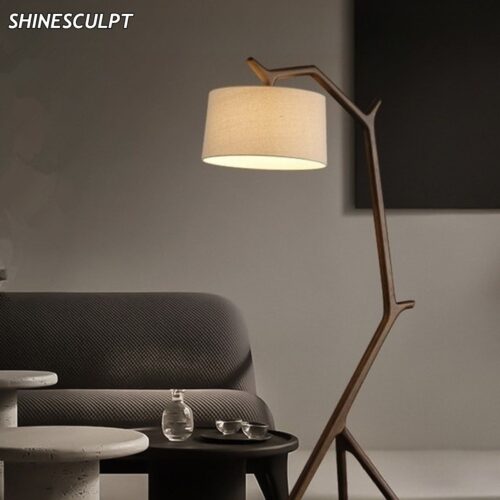 FL-013 Solid Wood Floor Lamp
Price range: $465.38 through $589.62
-
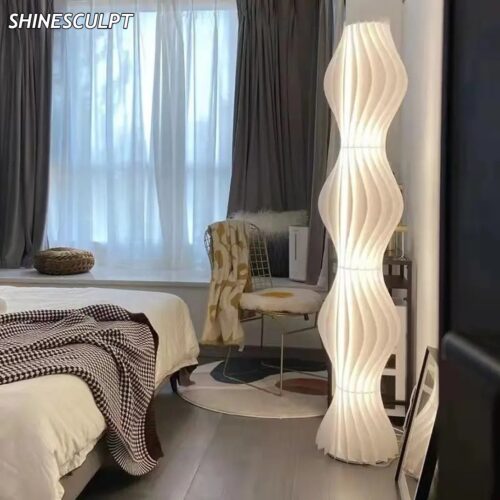 FL-012 Grass Skirt Floor Lamp
Price range: $34.62 through $62.31
-
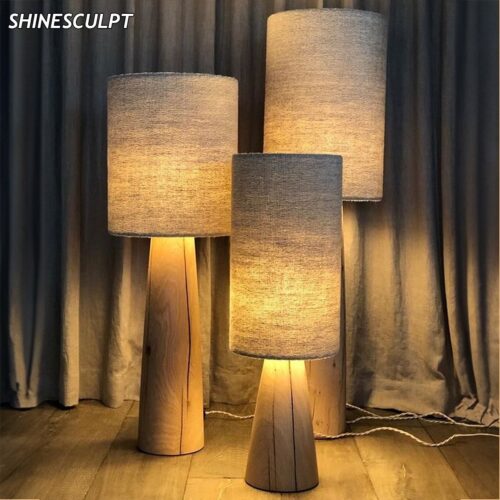 FL-011 Wabi-Sabi Floor Lamp
Price range: $500.00 through $576.92
-
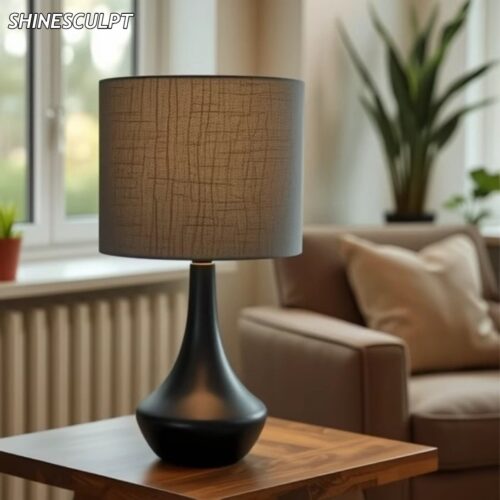 TL-006 Fabric Shade Bedside Lamp
$95.00