Choosing commercial ceiling lights comes down to four decisions made in order: measure the room, match the fixture size to that measurement, confirm the lamp base and the input voltage, then verify the mounting method against the ceiling construction. Finish, diffusion and colour temperature are refinements of those four decisions, not starting points. Work through them in sequence and most specification errors disappear before the order is placed.
Start With the Room, Not the Fixture
Most roll-outs go wrong at the drawing stage, when a fixture is picked from a catalogue photograph and then forced onto a floor plan. Reverse the order. Take the room schedule and record two numbers for every space: the area served by each lighting position, and the clear ceiling height measured from finished floor to the lowest obstruction.
Measure Floor Area per Lighting Position
Split each room into logical zones instead of treating it as one block. Above a workstation cluster an open-plan office behaves differently from the aisle beside it. Note column grids, supply and return diffusers, sprinkler heads and any exposed ductwork, because each of those constrains where a fitting can physically sit and how large it can be. Measure corridors by width and length separately: a 1.8 m wide corridor takes a smaller fixture than a 3 m foyer, even though both are circulation space. Also note the ceiling build-up, since a concrete slab and a suspended grid ceiling allow entirely different mounting options.
Match Fixture Size to Room Area
Practical experience across commercial fit-outs gives the working bands below. Treat them as a first pass that eliminates obviously wrong diameters, then confirm with a lighting designer against the project’s target illuminance.
| Fixture diameter | Typical area served per fixture | Rooms it usually suits |
|---|---|---|
| 35 cm | 6-9 m² | cellular offices, corridors, toilets, plant and storage rooms |
| 45 cm | 9-14 m² | hotel guest rooms, small meeting rooms, staff areas |
| 55 cm | 14-20 m² | open-plan workstation zones, restaurants, clinic rooms |
| 65 cm | 20-28 m² | lobbies, retail floors, larger meeting rooms |
| 80 cm | 28-40 m² | banquet halls, showrooms, atria with high ceilings |
Two adjustments matter more than the table itself. First, a fixture serving a tall room must be larger than the same fixture in a room with a normal ceiling, because light spreads further and arrives weaker on the working plane. Second, in rooms with dark finishes or heavy furniture, plan on the upper end of the band or an extra position. Our surface mounted ceiling lights are built across this range in 35 cm to 80 cm diameters with acrylic diffusers and iron bodies, which lets a project hold one design language across several room types instead of mixing suppliers.
E27 Base or Integrated LED?
This is the decision that determines what happens in year three of the building’s life, not on day one. Both routes deliver the same kind of light into a room; they differ in maintenance, spares, and how easily the specification can change later.
When an E27 Base Is the Better Choice
An E27 base separates the fixture from the light source. A failed lamp is swapped in place by housekeeping or a maintenance technician with no electrical isolation and no lift. A portfolio of guest rooms or serviced offices holds one lamp type as a spare rather than a model-specific module for every fitting. If a tenant later wants a different colour temperature, the lamp changes and the fixture stays. Our E27 ceiling lights run on an AC85-265V input, which keeps a single part number usable across markets with different mains voltages and keeps the spare stock simple for a multi-site client.
When Integrated LED Is the Better Choice
An integrated unit allows a shallower body and a continuous diffuser with no visible lampholder, which reads cleaner against a low ceiling and suits sealed specifications where the client does not want anyone handling lamps on site. The trade-off sits in service: a driver failure becomes a fixture-level repair, and any future colour change means replacing the fitting rather than the lamp.
| Decision factor | E27 base | Integrated LED |
|---|---|---|
| On-site lamp change | yes, no electrician needed | no, driver-level repair |
| Spares to stock | one lamp covers many rooms | model-specific modules |
| Profile | standard body, lampholder visible | slim, seamless diffuser |
| Change colour later | change the lamp | change the fixture |
| Fits best | hotels, leased offices, mixed portfolios | new-build with a fixed brief, sealed ceilings |
What AC85-265V Means on a Project Site
A wide input range of AC85-265V means the same fixture can be installed on a 110-120V supply or a 220-240V supply without a separate SKU. For a fit-out contractor running one interiors package in more than one country, that removes a layer of ordering risk: one line item, one spare stock, one specification sheet for the site team. It also gives the driving electronics headroom in older buildings where the measured voltage at the lighting circuit sits above or below nominal, or dips when large loads switch on at the same time.
Two practical points follow. First, with an E27 base the lamp is part of the circuit, so the lamp you install must also be rated for the voltage present; a wide-voltage fixture fitted with a 230V-only lamp is not protected. Second, a voltage range is not a substitute for correct circuit design. Cable sizing, protective devices and earthing remain the electrical contractor’s scope in every market, and the range on the fixture label describes only what the fixture itself will accept.
Matching Light Output to Room Use
Light output is a specification, not a marketing number, and it is the part of selection most often skipped under programme pressure.
Read Lumens and Lux Correctly
Lumens (lm) describe the total light a lamp produces. Lux (lx) describe light arriving on a surface, where one lux equals one lumen per square metre. Multiply the room’s floor area by the target illuminance to get the total lumens the room needs, then divide by the lumen output of the chosen lamp to estimate the number of positions. Add an allowance for losses from dirt, lamp ageing and diffuser absorption, commonly in the region of 20-30 per cent of the initial figure, and confirm the final count with a lighting designer before the reflected ceiling plan is issued.
Use Room Bands as a Starting Point, Not a Promise
The bands below are widely used design starting points in commercial interiors. They describe targets for the finished space and must be confirmed against the applicable standard and the client’s brief; they do not describe the output of any individual fixture.
| Space | Commonly used target illuminance band |
|---|---|
| Corridors and stairwells | 100-150 lx |
| Hotel guest rooms, general lighting | 100-200 lx |
| Open-plan offices and meeting rooms | 300-500 lx |
| Restaurants and bars, dining areas | 100-200 lx |
| Retail sales floors | 300-750 lx |
| Reception and lobby | 200-300 lx |
Where a room needs both general and task light, for example a restaurant with a bar, or a reception desk inside a large lobby, specify the ceiling light as the base layer and add a task layer above the work surface. Keep the two layers on the same colour temperature so the room does not read as two separate halves.
Choosing the Mounting Method
The mounting method is a function of the ceiling build-up, not of personal preference.
Surface Mounted
Surface mounting suits concrete slabs, existing ceilings that cannot be cut, and retrofit work where the client keeps the ceiling in place. The fixture hangs below the soffit, so check that it clears doors, signage and overhead services. It is the most forgiving option on a retrofit programme because the installation does not depend on plenum depth.
Recessed
Recessed mounting needs a clear plenum of roughly 100-150 mm and a ceiling that can be cut. It produces the flattest ceiling line, but it locks the layout to the ceiling grid and to whatever services already occupy the void. Confirm the plenum before the fixture is ordered, not after the grid has been set out.
Suspended
Suspended mounting is used where the ceiling is high or the structure is intentionally exposed. Suspension points must be load-rated and fixed before the ceiling closes, and the drop has to be coordinated with sprinkler heads, ductwork and sightlines. In rooms that also need air movement, a ceiling fan with light can carry the air and part of the light from the same point, which simplifies the ceiling layout and reduces the number of separate positions to coordinate.
Six Checks Before You Accept the Delivery
Run these on every batch, not only the first, and record the result against the batch number.
- Count and identity. Check carton quantity and model codes against the packing list and the purchase order, and confirm that each size from 35 cm to 80 cm is present in the quantity ordered.
- Dimensions. Measure one unit of each size with a tape across the diameter and the depth. A fixture that has drifted from the drawing will not sit correctly in a recessed detail or clear a ceiling register.
- Finish under raking light. Inspect paint, plating and seams with the light source held at a low angle, which reveals dents and shading that flat lighting hides.
- Electrical function. Power a sample unit, check driver and lamp together, and confirm the markings on both match the purchase order voltage.
- Fixings and hardware. Check the mounting bracket, cord, lampholder and screws. Loose lampholders and thread damage are among the most common field complaints and are visible on the bench long before installation.
- Spares and documents. Confirm that the ordered spares, packing list and warranty paperwork are in the shipment, and that the 3-year manufacturer warranty terms are on file for the client.
Record the batch reference in the project file as each check passes. Should anything need correcting, that reference is what makes the follow-up fast and traceable.
Send your room schedule, ceiling heights, target illuminance and the mains voltage of the destination market, and we will confirm the sizes and lamp types that fit. We manufacture commercial ceiling lights in Guzhen, Zhongshan, Guangdong Province, with surface mounted LED units from 35 cm to 80 cm in acrylic and iron, E27 bases and AC85-265V input; custom materials, dimensions, finishes and lamp options are available, with no minimum order, lead times of 15-30 days, worldwide door-to-door shipping and a 3-year manufacturer warranty. Message us through the contact page or on WhatsApp and WeChat at +86 180 2480 4499.
About the author : hy-tanya@hotmail.com

Related posts
Popular products
-
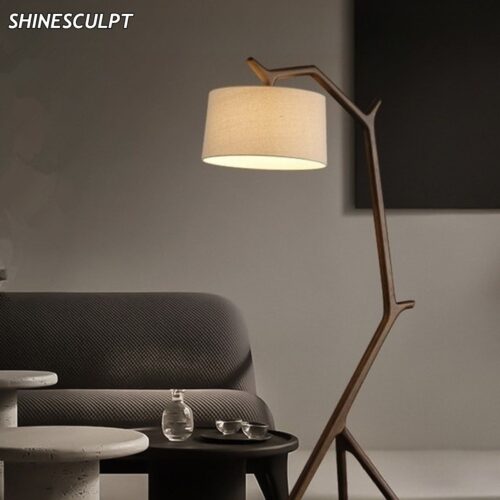 FL-013 Solid Wood Floor Lamp
Price range: $465.38 through $589.62
-
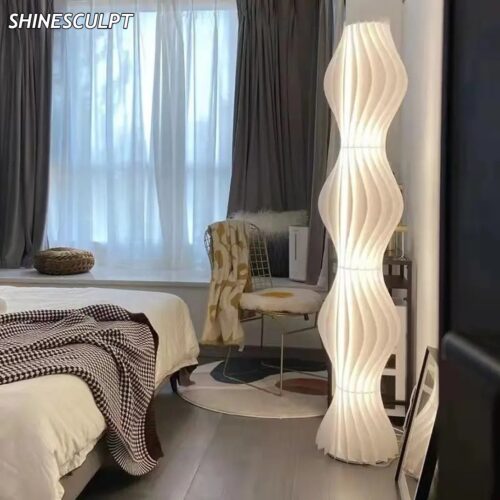 FL-012 Grass Skirt Floor Lamp
Price range: $34.62 through $62.31
-
 FL-011 Wabi-Sabi Floor Lamp
Price range: $500.00 through $576.92
-
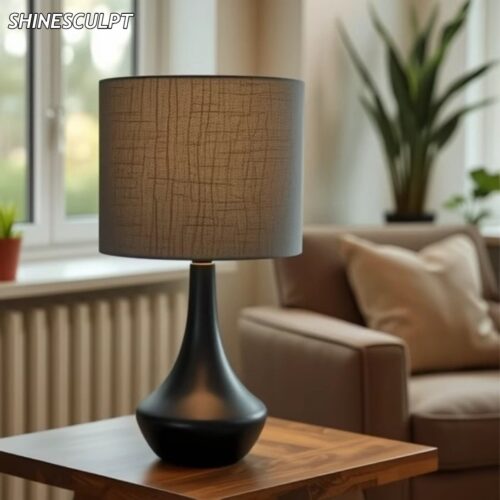 TL-006 Fabric Shade Bedside Lamp
$95.00